
The control stack for quantum hardware and software.
Bring hardware online through the control layer it already runs on, or layer your own control and orchestration software on top of that same stack. Either way, reach 30K+ developers across Lab, Runtime, and the SDK.
One control stack, from the pulse to the developer.
Most quantum hardware is already driven by a control box. Gateway brings devices online through that layer, and lets software companies deploy their own control and orchestration on the very same stack the providers run.

A storefront for what you build.
Hardware or software, from the control layer to the developer. We handle connectivity, auth, metering, billing, and job routing. You set the terms, and qBraid puts what you publish in front of people ready to run.
- Register as a provider.
Create a provider profile: name, description, logo, docs, and support contact. Your brand shows up next to everything you publish across Lab, Runtime, and the SDK.
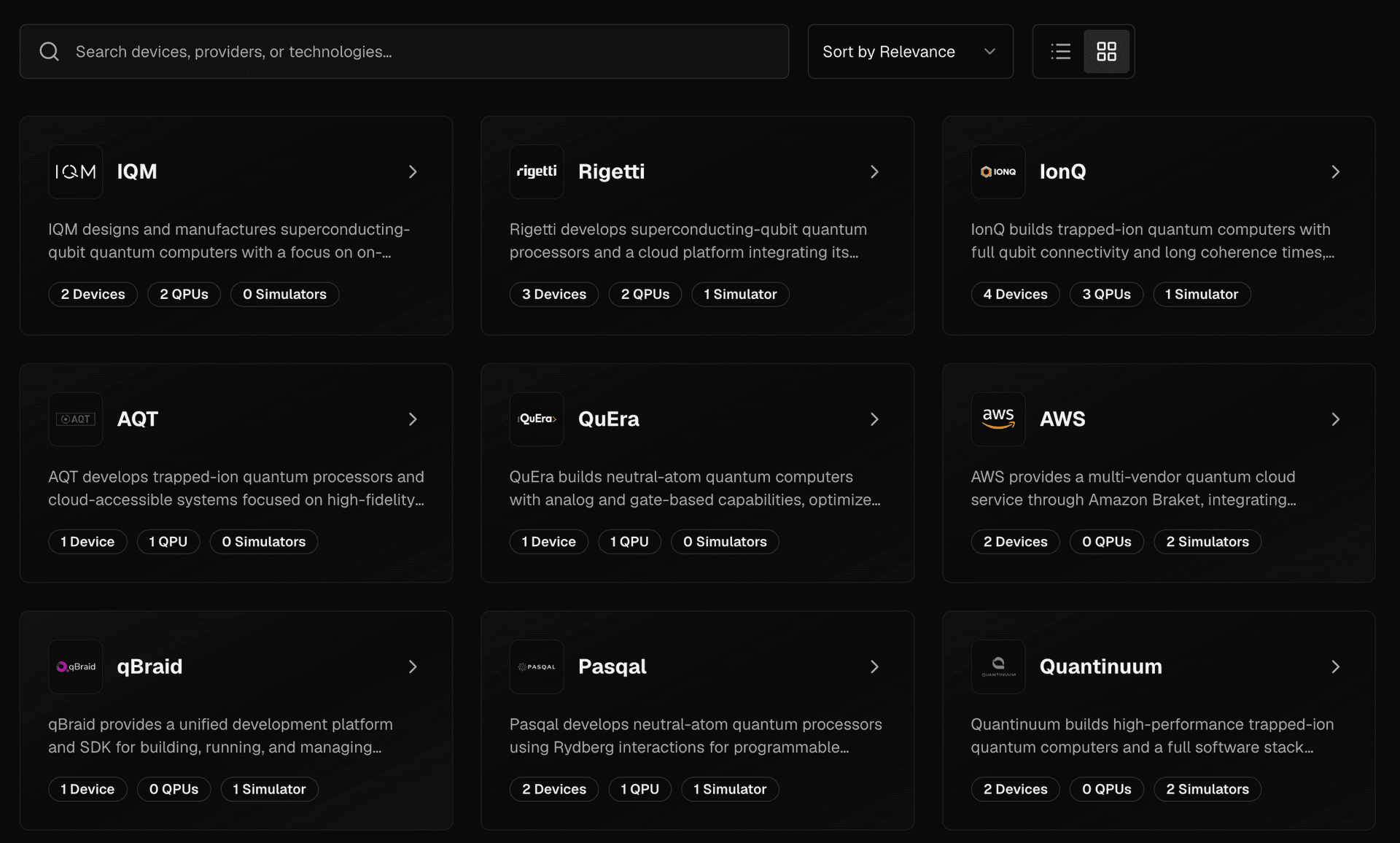
- Publish devices and software.
List each QPU or simulator with its paradigm, modality, qubit count, and noise models. Software ships as an Explore project or integration, so developers know exactly what they can run.
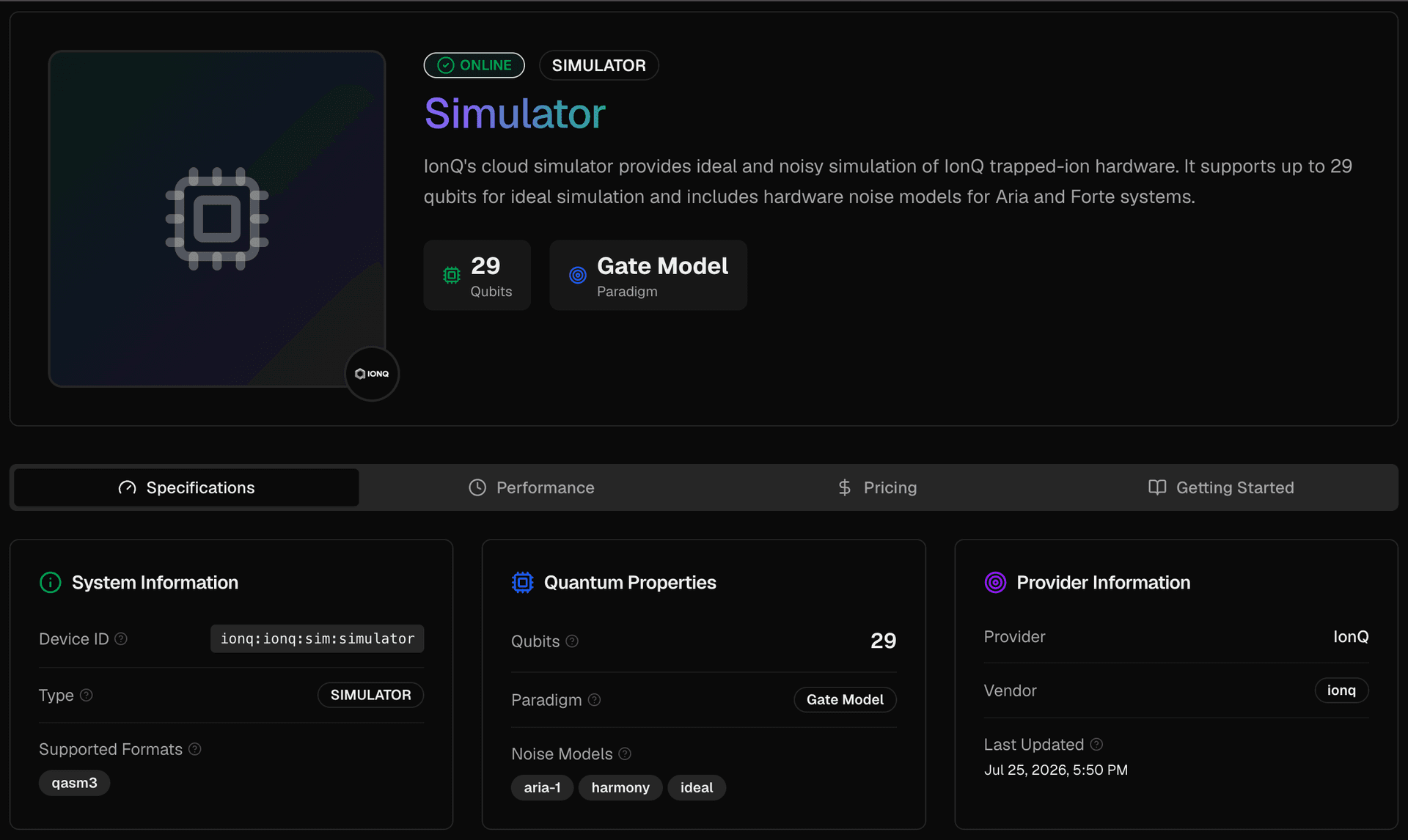
- Surface live calibration.
Push coherence times, fidelity, and other calibration metrics to the dashboard, with median, min, and max, and update status the moment a device goes online or offline.
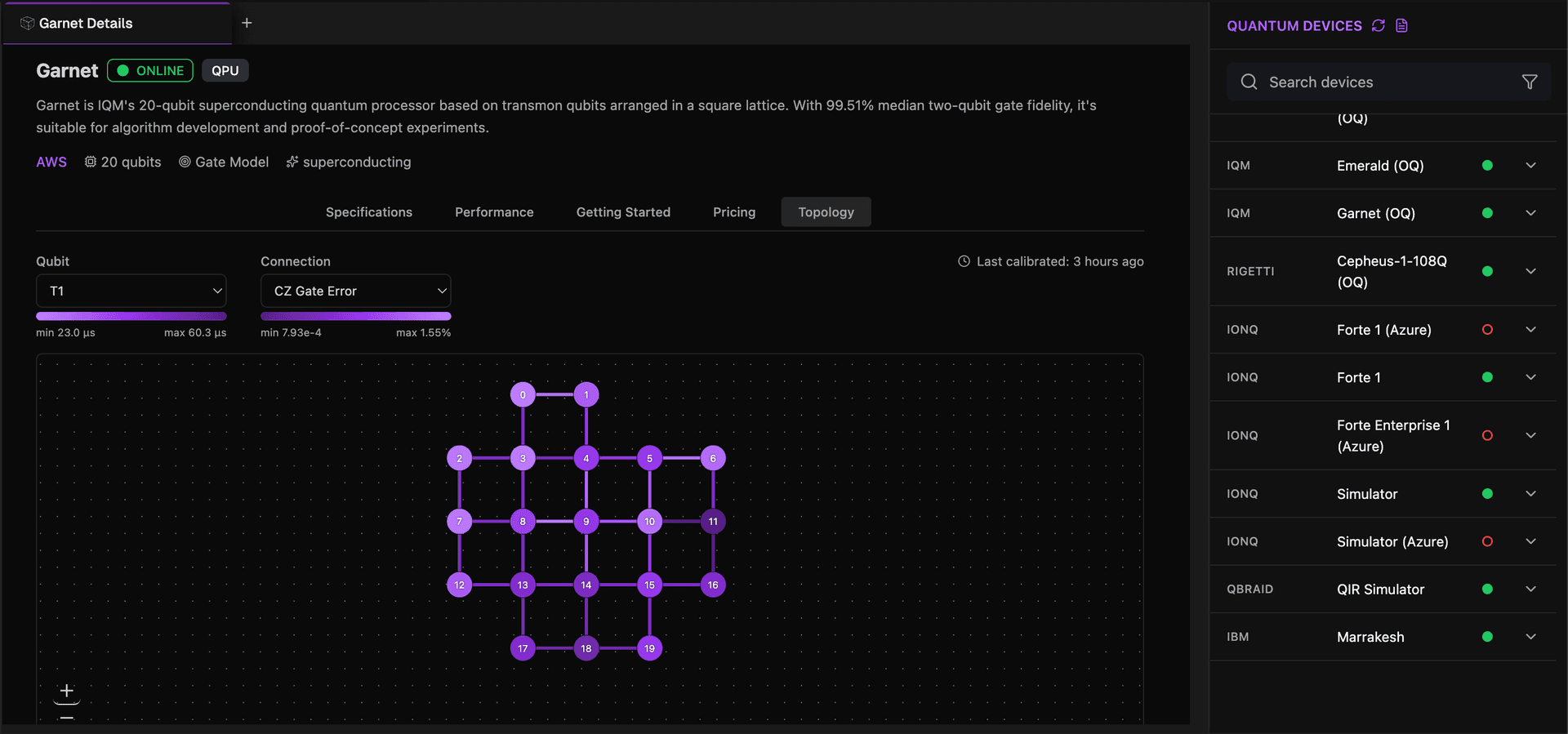
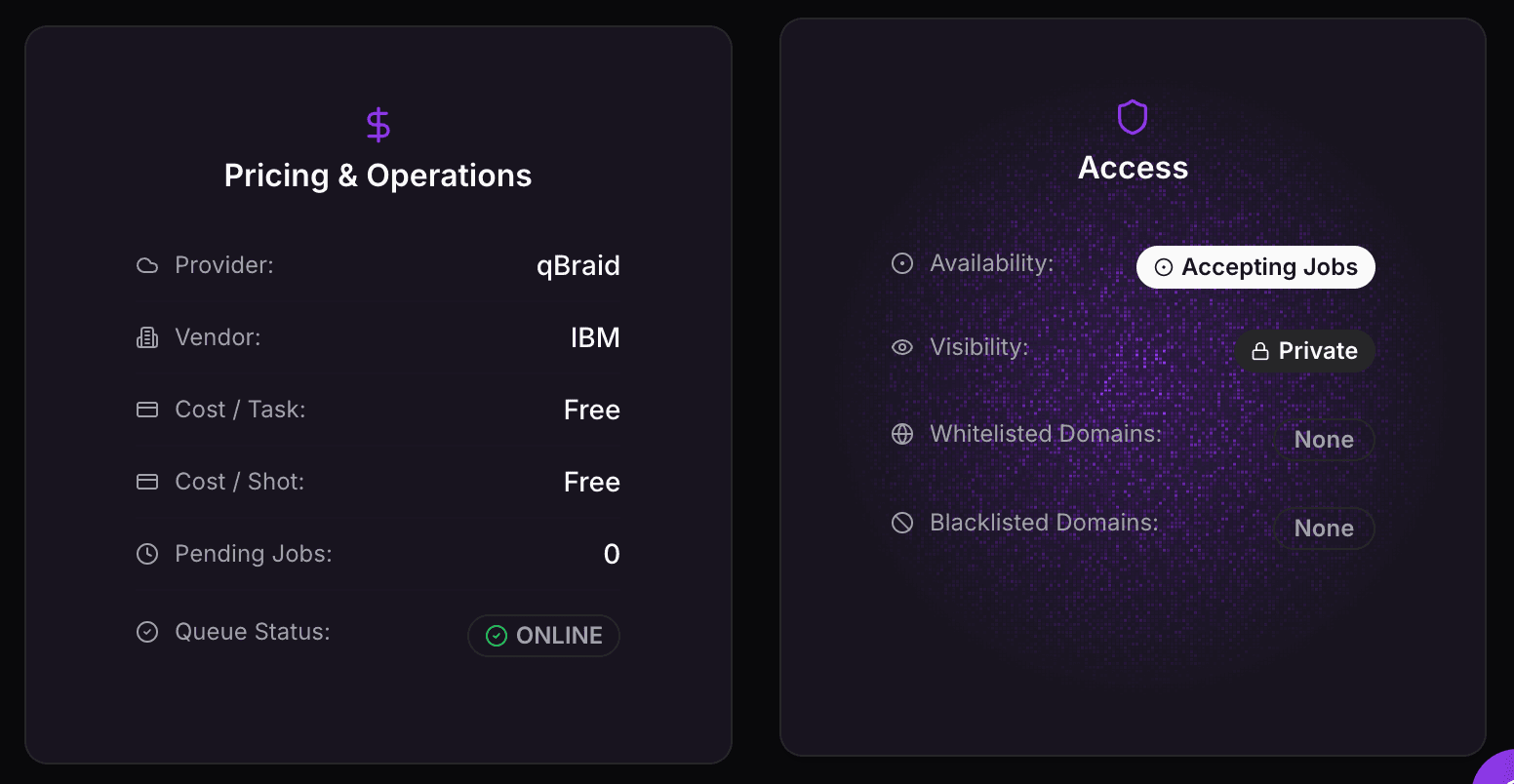
- Set your own pricing.
Price per minute, per task, per shot, or upload a pricing file. qBraid handles metering, credits, and billing so you get paid for every job that lands.
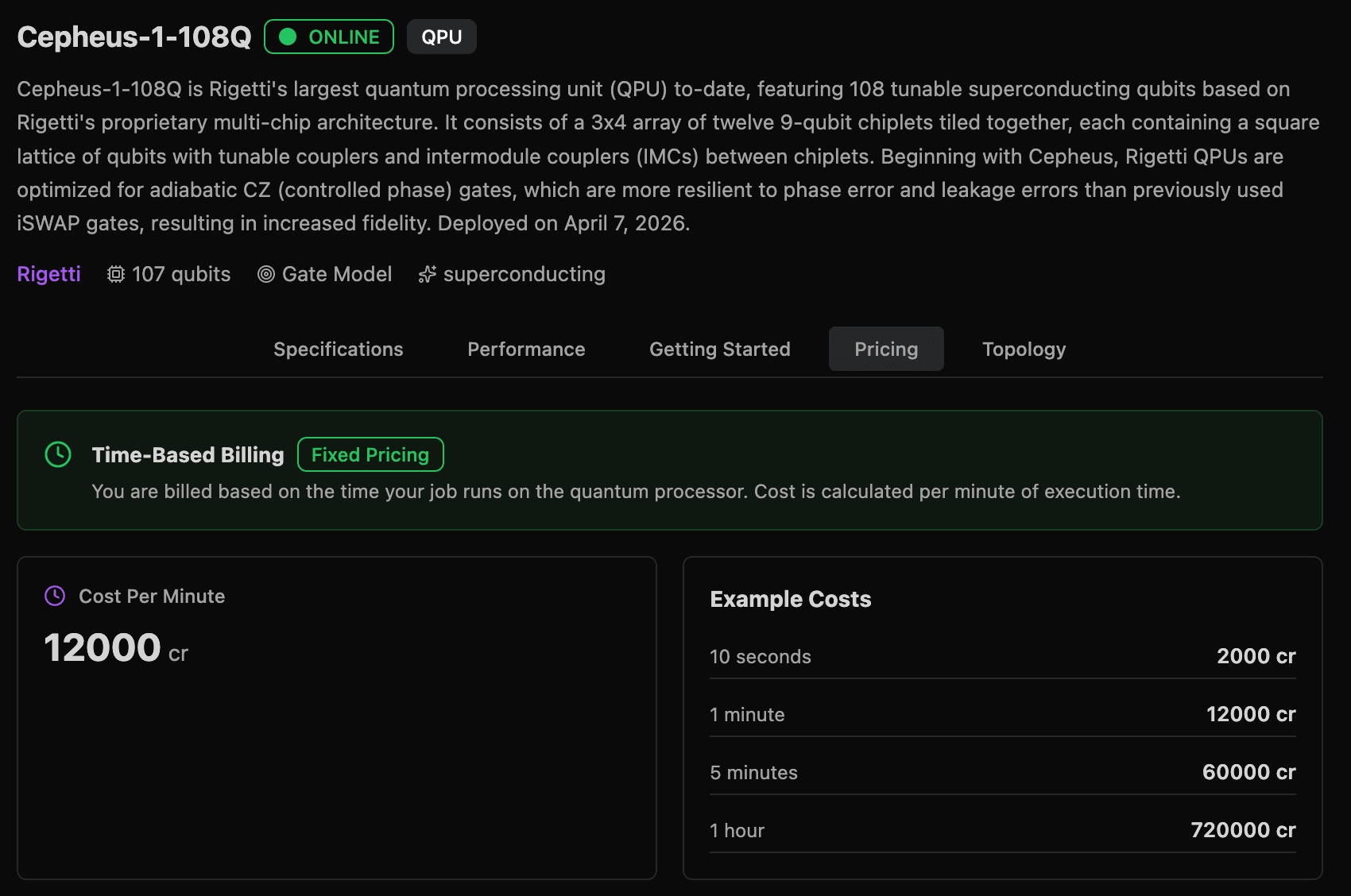
- Control who has access.
Gate devices with domain allow and deny lists, and manage your team with owner, admin, member, and viewer roles across your organization.
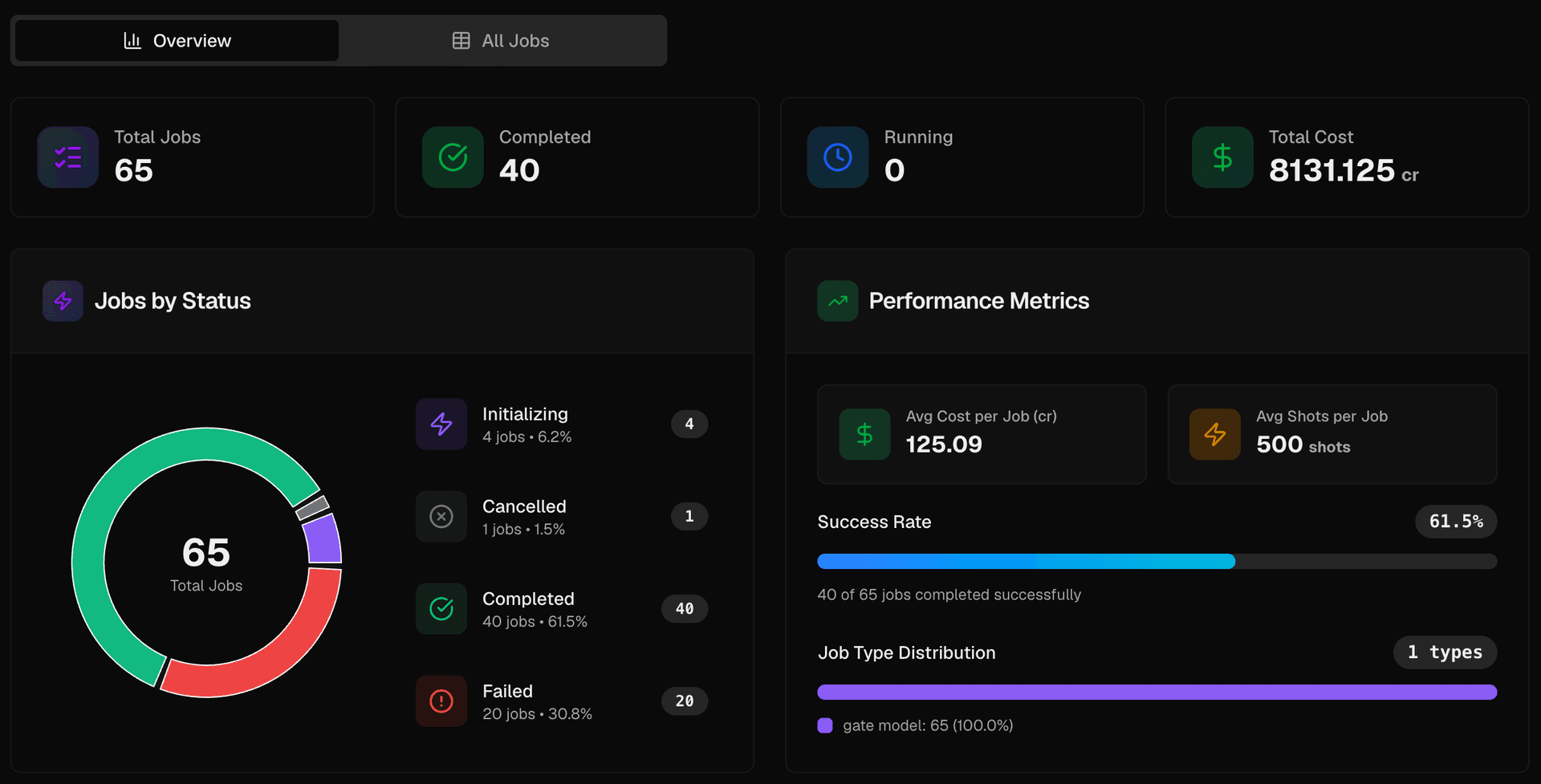
- Watch jobs land.
See every submission, track queue depth and throughput, and catch failures early, with job metrics and recent-failure views scoped to your fleet.
Put your stack in front of every developer.
Bring your hardware online or layer your software on the control stack, then reach 30K+ developers across Lab, Runtime, and the SDK.