
01
Unified device access.
One SDK and one API reach 20+ QPUs and simulators across 11 providers: IonQ, QuEra, Rigetti, IQM, AQT, and more. Swap backends by changing a single device ID.
qBraid Runtime is the execution layer: one interface to every quantum provider. Hand it a program in any framework and Runtime transpiles it, adapts it to the target device, validates, and dispatches across 20+ backends, then returns a structured result.
The same SDK that powers Runtime is free and open source. Its graph-based transpiler translates your circuit into whatever language the target device supports, from Qiskit, Cirq, or Braket down to OpenQASM.
With 1M+ pip installs and backing from an NSF POSE award, it's used by developers everywhere. Read every line on GitHub.
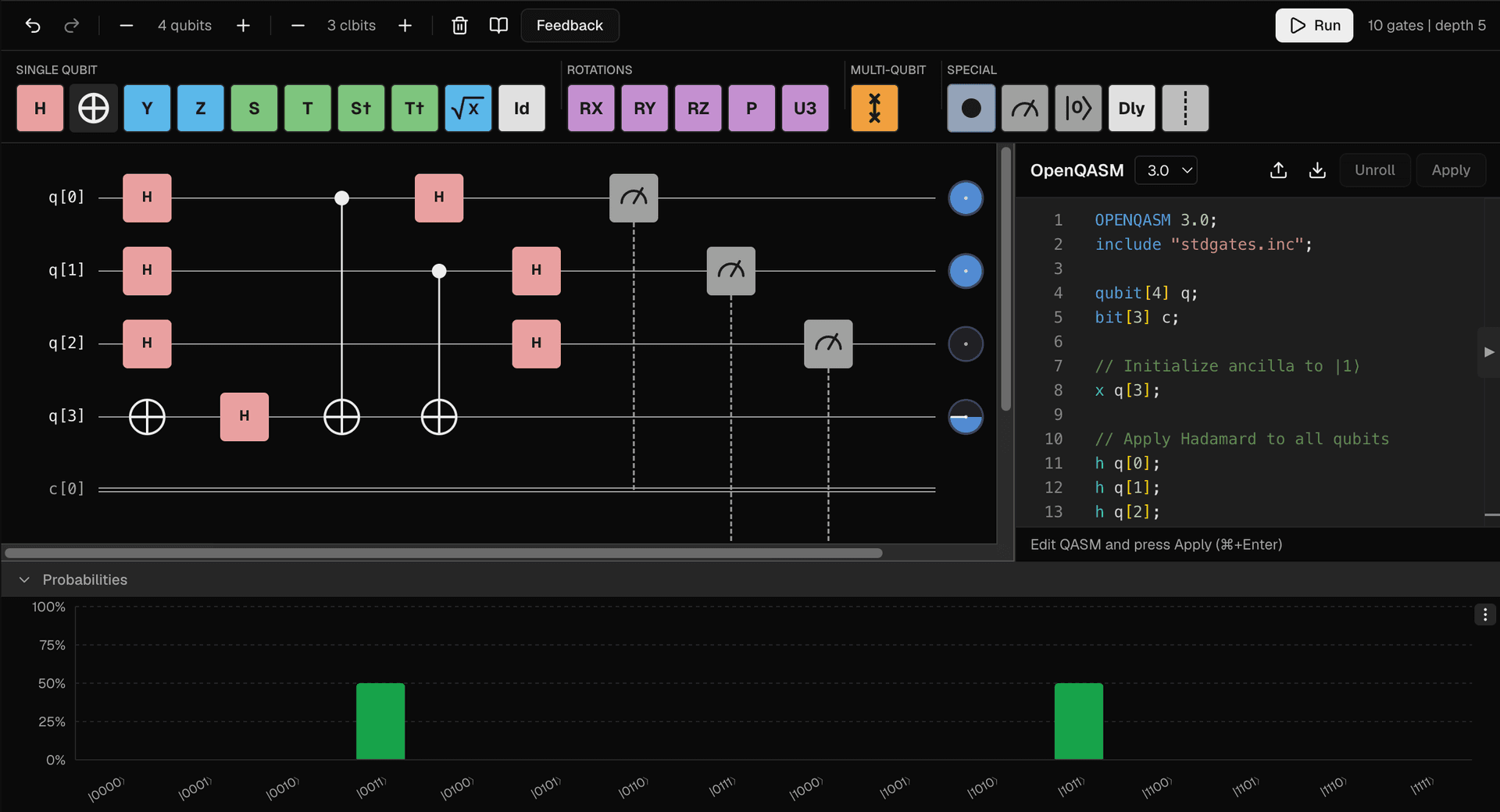
Everything between submit and result is handled: transpile, compile, dispatch, and track. You focus on the circuit.
One SDK and one API reach 20+ QPUs and simulators across 11 providers: IonQ, QuEra, Rigetti, IQM, AQT, and more. Swap backends by changing a single device ID.
Write in Qiskit, Cirq, Braket, OpenQASM, PyQuil, and more. A graph-based transpiler translates your program into whatever language the target device supports, whether it runs on gates or analog pulses.
Runtime rewrites your program to each backend automatically: native gate sets, qubit limits, and submission formats. No per-vendor rewrites on your side.
Submit a single job, batch many circuits to one device, or spread a workload across multiple providers, then collect every result together.
Queued, validating, running, completed: track every state, retry, and pull results from the SDK, the CLI, or Lab, with a live view of the fleet.
The same open-source qBraid SDK drives Runtime from the terminal, a notebook, or Lab. Install with pip and run it anywhere your code already lives.
Runtime keeps a real-time picture of what’s online, what’s queued, and how to dispatch. One command lists every device you can target right now, and the same source-of-truth drives Lab, the SDK, and every job submission.
Auth and credentials shared across SDK, CLI, and Lab.
PROVIDERSAWS, IonQ, QuEra, Rigetti, IQM, AQT, and more.
DEVICESStatus, queue depth, and capabilities, live.
JOBSSubmit, track jobs, and pull results from one client.
Runtime is the fastest way to put your device in front of qBraid's developers, researchers, and enterprises. Expose a few REST endpoints and we assemble the entire client stack around them.
List once and your device is reachable from Lab, the SDK, and the CLI, in front of qBraid developers, researchers, and enterprises worldwide.
Expose list-devices, submit-job, and fetch-results. Runtime handles the SDK, CLI, and Lab surfaces, plus transpilation from every major framework to your device.
Auth, sessions, job lifecycle, queueing, and a live device view come built in. No client libraries for you to write or maintain.
Write your program once and dispatch it to any QPU or simulator through a single runtime. Free to start.