
We are pleased to have presented qBraid's Platform-Agnostic Open-Source Tools in the Quantum Computing Devroom at FOSDEM 2025. As one of the largest open-source gatherings, FOSDEM brought back its Quantum Computing Devroom after four years, and we were honored to be invited by the Unitary Fund, alongside speakers from Pasqal, IBM, and other key contributors to the quantum computing ecosystem.
Presentation at FOSDEM
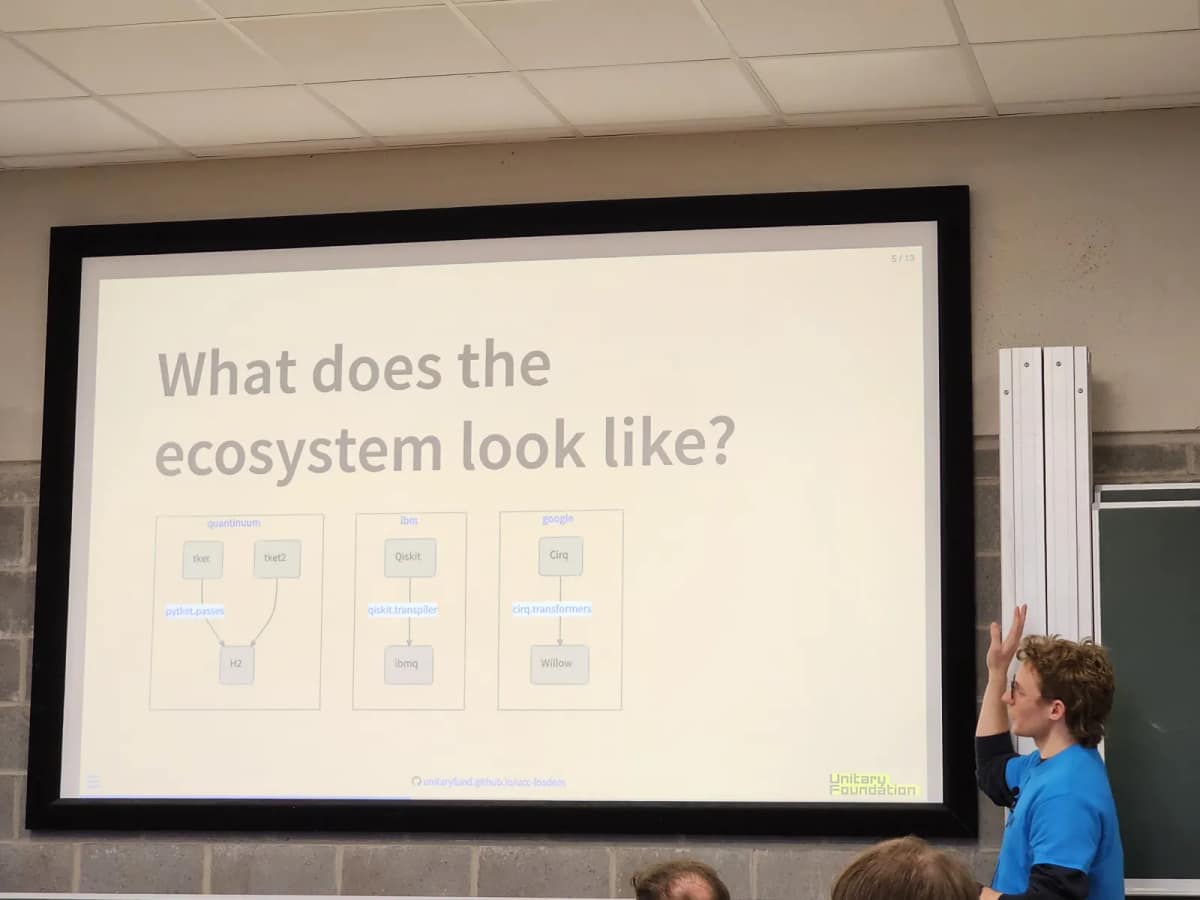
Our engineer, Harshit Gupta, delivered a talk on the qBraid SDK and pyqasm, emphasizing their platform-independent capabilities and intuitive design for quantum software development. There was significant interest in qBraid's SDK transpiler, leading to in-depth discussions of its architecture and internal workings. Participants were eager to understand the motivations behind our graph-based transpiler model, what input formats it could handle, and how it could be expanded to a larger set of quantum software packages.
Key Takeaways
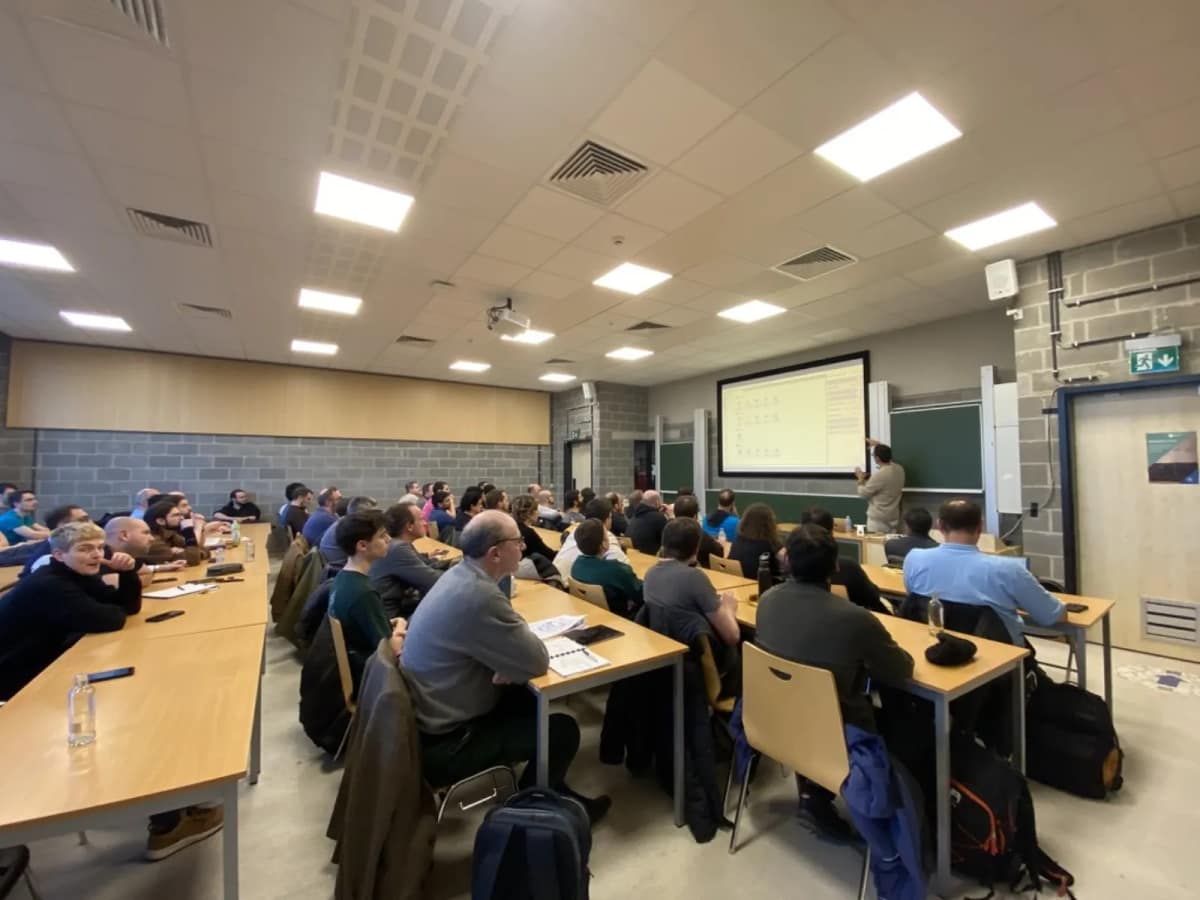
High attendance highlighted a growing interest in quantum computing, including among those with minimal prior exposure. While participants had a lot of experience with open-source software, it was delightful to see their interests extend well beyond classical computing. Even where some math concepts were glossed over, participants were particularly engaged when they saw that the development lifecycle for quantum software is almost identical to what they already know.
Live demonstrations proved highly effective at simplifying complex concepts and driving engagement. In particular, people were receptive to the Jupyter notebook format, and packages with Pythonic interfaces were easier to follow than CLI ones.
Attendees showed strong technical curiosity, willing to explore in-depth details when backed by clear motivation and practical applications. Once the problems were understood, people were ready to draw analogies to graph theory, data structures, and other essentials of building scalable quantum software.
The quantum open-source community is highly collaborative, with researchers and developers working together to improve accessibility and drive meaningful advances. In fact, a collaboration between qBraid and QuMat developed organically out of FOSDEM. It reinforced our belief in a more open development mindset that breaks through siloed approaches — collaborative development brings diverse ideas, points of view, and a path toward standardization, all of which are essential for our nascent field.
Looking Ahead
At qBraid, our mission is closely aligned with the insights reinforced at FOSDEM — developing open, intuitive, and accessible quantum computing tools. We remain committed to fostering collaboration and innovation across the quantum ecosystem.
Watch the recording here, browse the presentation slides, or explore our documentation.